

mfa-webauthn-roaming-challenge screen.
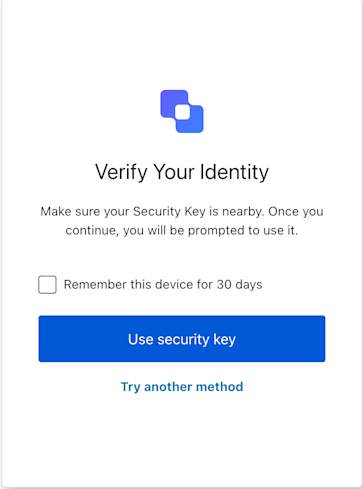
Constructors
Create an instance of MfaWebAuthnRoamingChallenge screenExample
Properties
branding
Provides branding-related configurations, such as branding theme and settings.
client
Provides client-related configurations, such as
id, name, and logoUrl.organization
Provides information about the user’s organization, such as organization
id and name.prompt
Contains data about the current prompt in the authentication flow.
screen
Contains details specific to the
mfa-webauthn-roaming-challenge screen, including its configuration and context.tenant
Contains data related to the tenant, such as
id and associated metadata.transaction
Provides transaction-specific data, such as active identifiers and flow states.
untrustedData
Handles untrusted data passed to the SDK, such as user input during login.
user
Details of the active user, including
username, email, and roles.Methods
getErrors
This method retrieves the array of transaction errors from the context, or an empty array if none exist.
This method reports a specific WebAuthn API error to Auth0. This method should be used if
navigator.credentials.get() fails in a way that
verify() doesn’t automatically handle, or if the developer wants to explicitly report an error before trying another action. It submits the error details with action: "showError::{errorDetails}". Returns a promise that resolves when the error report is submitted.Example
Contains the error object (with
name and message properties from the browser’s WebAuthn API DOMException) and any other custom options.This method allows the user to opt-out of the WebAuthn challenge and select a different MFA method. This action submits
action: "pick-authenticator" to Auth0, which should navigate the user to an MFA factor selection screen. Returns a promise that resolves when the action is submitted.Example
Optional custom parameters to be sent with the request.
This method initiates the WebAuthn challenge by calling
navigator.credentials.get() with the options provided in screen.data.publicKeyChallengeOptions.
If successful, it submits the resulting credential to Auth0 with action: "default". If navigator.credentials.get() fails with a known WebAuthn API error, for example: NotAllowedError, this method will internally call reportWebAuthnError to inform Auth0. Returns a promise that resolves when the verification attempt is submitted.Example
Optional parameters for the verification. This can include
rememberDevice if this.screen.showRememberDevice is true, and any other custom key-value pairs to be sent in the form submission.