

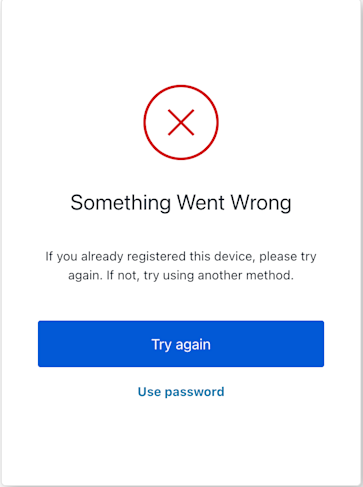
mfa-webauthn-error screen.
Constructors
Create an instance of MFAWebauthnError screenExample
Properties
branding
Provides branding-related configurations, such as branding theme and settings.
client
Provides client-related configurations, such as
id, name, and logoUrl.organization
Provides information about the user’s organization, such as organization
id and name.prompt
Contains data about the current prompt in the authentication flow.
screen
Contains details specific to the
mfa-webauthn-error screen, including its configuration and context.tenant
Contains data related to the tenant, such as
id and associated metadata.transaction
Provides transaction-specific data, such as active identifiers and flow states.
untrustedData
Handles untrusted data passed to the SDK, such as user input during login.
user
Details of the active user, including
username, email, and roles.Methods
getErrors
This method retrieves the array of transaction errors from the context, or an empty array if none exist.
This method allows the user to decline the current WebAuthn operation (e.g., refuse to add a device during enrollment). This action signifies the user’s choice not to proceed with the WebAuthn step at this time. Returns a promise that resolves upon successful submission of the ‘refuse-add-device’ action.
Example
Optional custom parameters to be sent with the request.
This method allows the user to retry the previous WebAuthn operation. This action typically redirects the user to the screen where the WebAuthn process was initially attempted (e.g., back to the MFA challenge or enrollment screen for WebAuthn). Returns a promise that resolves upon successful submission of the ‘tryagain’ action.
Example
Optional custom parameters to be sent with the request.
This method allows the user to choose a different Multi-Factor Authentication method. This action navigates the user to a screen where they can select from other available/enrolled MFA factors. Returns a promise that resolves upon successful submission of the ‘pick-authenticator’ action.
Example
Optional custom parameters to be sent with the request.
This method allows the user to attempt authentication using their password, if this alternative is configured and appropriate for the current flow (e.g., if password was a prior authentication step or is a valid MFA bypass). Returns a promise that resolves upon successful submission of the ‘use-password’ action.
Example
Optional custom parameters to be sent with the request.